For more than a decade, the working assumption in rural electrification has been that capacity is the bottleneck. Build out generation, the logic goes, and the rest of the economy follows. A previous Inside Impact piece argued that this is incomplete. The infrastructure works. The economic layer that was supposed to come with it often does not, because the missing piece is rarely kilowatts. It is reliable off-take for what the powered community can now produce.
That earlier argument left a question hanging. If connection alone is not enough, what does it look like when someone designs for both at once? Two operators on different continents are now answering in real time. Husk Power Systems is doing it commercially, at scale, across India and Nigeria. Nuru is doing it in eastern Congo, with the kind of community design that has kept the lights on through an active conflict. The differences between them are part of the lesson.
What scale looks like when the productive-use case actually works
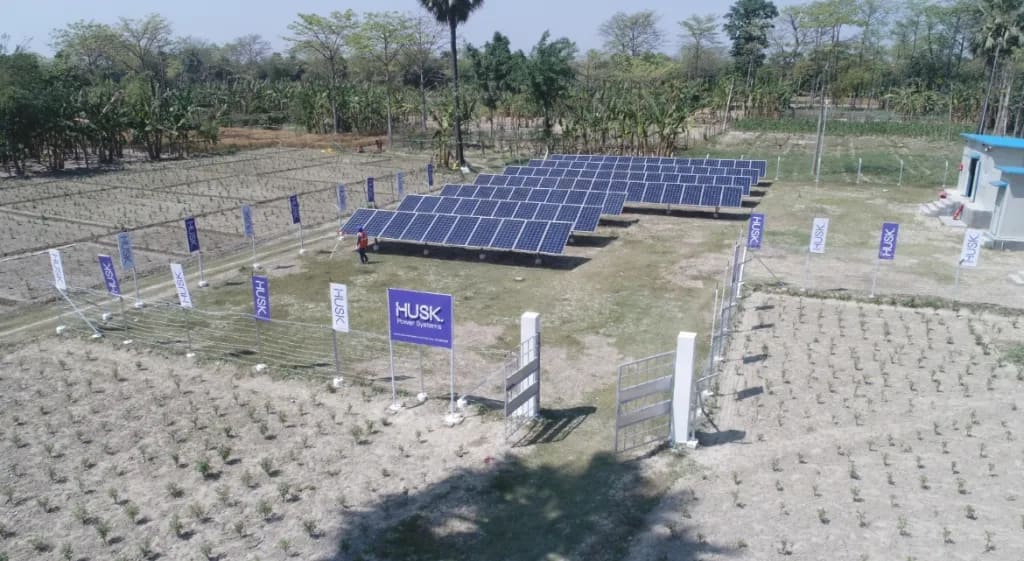
Husk Power Systems started in Bihar in the late 2000s, building hybrid mini-grids in villages the national grid never quite reached. Most of the operators from that first generation either folded or pivoted into something easier. Husk did something rarer in this sector: it scaled.
Its current footprint is more than 400 rural communities across India and Nigeria, serving roughly 1.5 million residential customers and over 30,000 small businesses. In 2024 the company installed one new mini-grid per day, the industry's fastest deployment rate by Fast Company's account. It became EBITDA positive in 2023, an industry first for a mini-grid pure-play.
What separates Husk from most peers is the deliberate stacking of productive use into every site. A typical Husk grid is sized around an anchor load (often agricultural processing or cold chain) with residential demand layered on top. Welders, rice millers, cold-chain operators, and small workshops are the customers the operator designs around, and they consume far more than the average household connection. The grid is sized for what the community can produce, not only what it can passively consume.
That discipline is now attracting capital the sector historically could not reach. In late 2025, Bloomberg reported that Husk had launched a $400 million capital raise, the largest in the sector's history, while preparing for a public listing. The stated goal is to grow revenue tenfold by 2030 and reach 100 million people. For a category that spent the better part of a decade pitching against grant-only economics, that is a different conversation entirely.
What integration looks like in a conflict economy
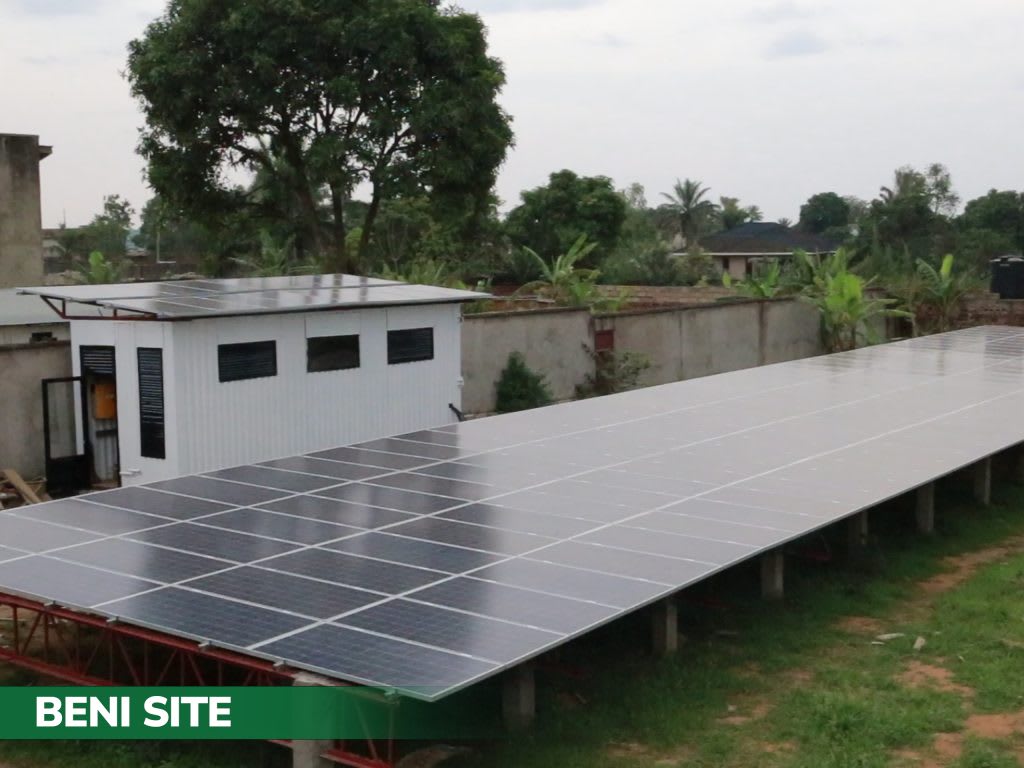
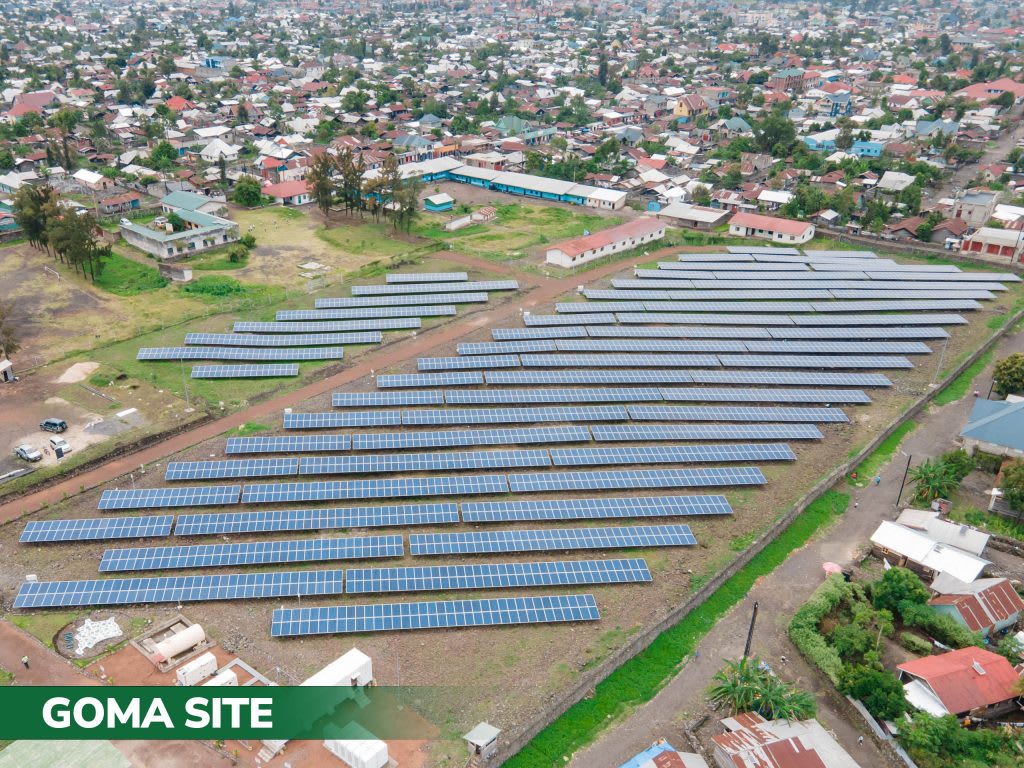
Across the continent, in eastern Democratic Republic of the Congo, Nuru operates four solar hybrid mini-grids across Goma, Beni, Tadu, and Faradje, totalling 1.69 MW of installed capacity. The portfolio is small next to Husk. The lesson is different and at least as useful.
Nuru has delivered more than 7,700 MWh at 99 percent uptime to roughly 22,000 end-users across about 3,000 commercial and residential customers. The Goma site is reported as one of the largest off-grid mini-grids in sub-Saharan Africa. The numbers matter, but the more telling story is what those grids do for the small economies that connect to them. A welder who had been running on diesel cut his energy costs to under a third of what he had been paying. A seamstress who had been working by candlelight saw her business triple after switching, and now employs two young women from her neighbourhood. Tailors, food vendors, phone-charging kiosks, and barber shops are staying open later because the cost of doing so finally makes sense.
The integration here is less commercial and more communal. Nuru built each site in concert with local cooperatives, trained community technicians on the ground, and set tariffs that reflected what local customers could actually pay. When M23 fighters captured Goma in late January 2025, in an offensive the UN later estimated had killed close to three thousand people, the grid kept running while neighbouring systems went down. Some panels took stray gunfire. Community members guarded the solar farm gates themselves. There is no engineering paper that captures that outcome. It is what happens when a piece of infrastructure has been treated as a community asset rather than a vendor deployment.
The institutional capital is following the same signal. Nuru closed a $40 million round to break ground on a 13.7 MWp expansion across Goma, Kindu, and Bunia, with an 8 MW Bunia plant expected to reach roughly 125,000 people through 10,500 new connections. The World Bank's MIGA arm has issued a $50 million guarantee on the wider build. In a province most lenders would still classify as uninsurable, sovereign-grade capital has decided the integration story is bankable.
What the two have in common that most projects don't
Husk and Nuru sit on opposite ends of the operator spectrum. One is preparing for a public listing on the back of fast deployment and commercial discipline. The other operates a small portfolio in a conflict zone. Two things connect them.
Neither treats the mini-grid as a product. Husk sizes its grids around productive load it has already identified. Nuru builds its grids with the community that will operate them. In both cases the integration sits upstream of the wires, not after.
And both have made the buyer-end of the chain part of the design from day one. Husk does it commercially, by stacking enterprise demand into every site. Nuru does it socially, by handing pieces of the operating model to the community itself. The shapes look different. The thing they are solving for is the same.
What this means for the next wave
The institutional money is starting to behave accordingly. The capital flowing toward Husk and Nuru is not flowing on the strength of kilowatt counts. It is flowing toward the operators who have done the harder work of designing for what happens after the meter starts spinning. For sector context, the African Development Bank's Green Mini-Grid Fundamentals remains a useful primer on the underlying economics.
That is the part of rural electrification that has been left for someone else to figure out for a long time. It is finally being figured out, in places far enough apart that the pattern looks less like a coincidence and more like a template.
A community with reliable power and no reliable buyer is still a community waiting. A community whose power has been designed around its economy is something else entirely.
Key facts
- Husk Power Systems operates more than 400 hybrid mini-grids across rural India and Nigeria.
- In 2024, Husk Power Systems installed one new mini-grid per day, the industry's fastest deployment rate.
- Nuru operates four solar hybrid mini-grids across Goma, Beni, Tadu, and Faradje, totalling 1.69 MW of installed capacity.
- Nuru has delivered more than 7,700 MWh at 99 percent uptime to roughly 22,000 end-users.
- Nuru closed a $40 million round to expand its capacity across Goma, Kindu, and Bunia.