UNESCO estimates the world will need approximately 44 million additional teachers by 2030 to keep classrooms staffed. Sub-Saharan Africa alone accounts for 15 million of that gap. Primary-school teacher attrition rates have nearly doubled since 2015, from 4.6 percent to over 9 percent.
By the metrics, education is short of people. By the design, it is short of pathways.
In the United States, the gap has a more specific shape. Roughly 1.2 million paraprofessionals, teacher assistants, classroom aides, and other non-certified staff work inside US school buildings every day. They know the children. They know the communities. Many of them have done the work for years. What they do not have is a credential, and the systems above them are not built to give them one.
This is the part of the global teacher-shortage story that the global conversation has been missing.
The wrong student
Higher education in the US was built around a particular kind of student. Full-time. On-campus. Supported by parents or savings. Free during the day. Able to relocate. Able to pause everything else for four years and treat school as the primary responsibility.
For most working adults, that has never been the reality. For paraprofessionals already working in schools, often supporting families on a modest salary, it is even further from the reality. The model serves its intended student well. It was just never designed around the population most likely to fill the gap it was supposed to close.
The 1.2 million already in the building
Many of the teachers the country needs are already serving in its schools.
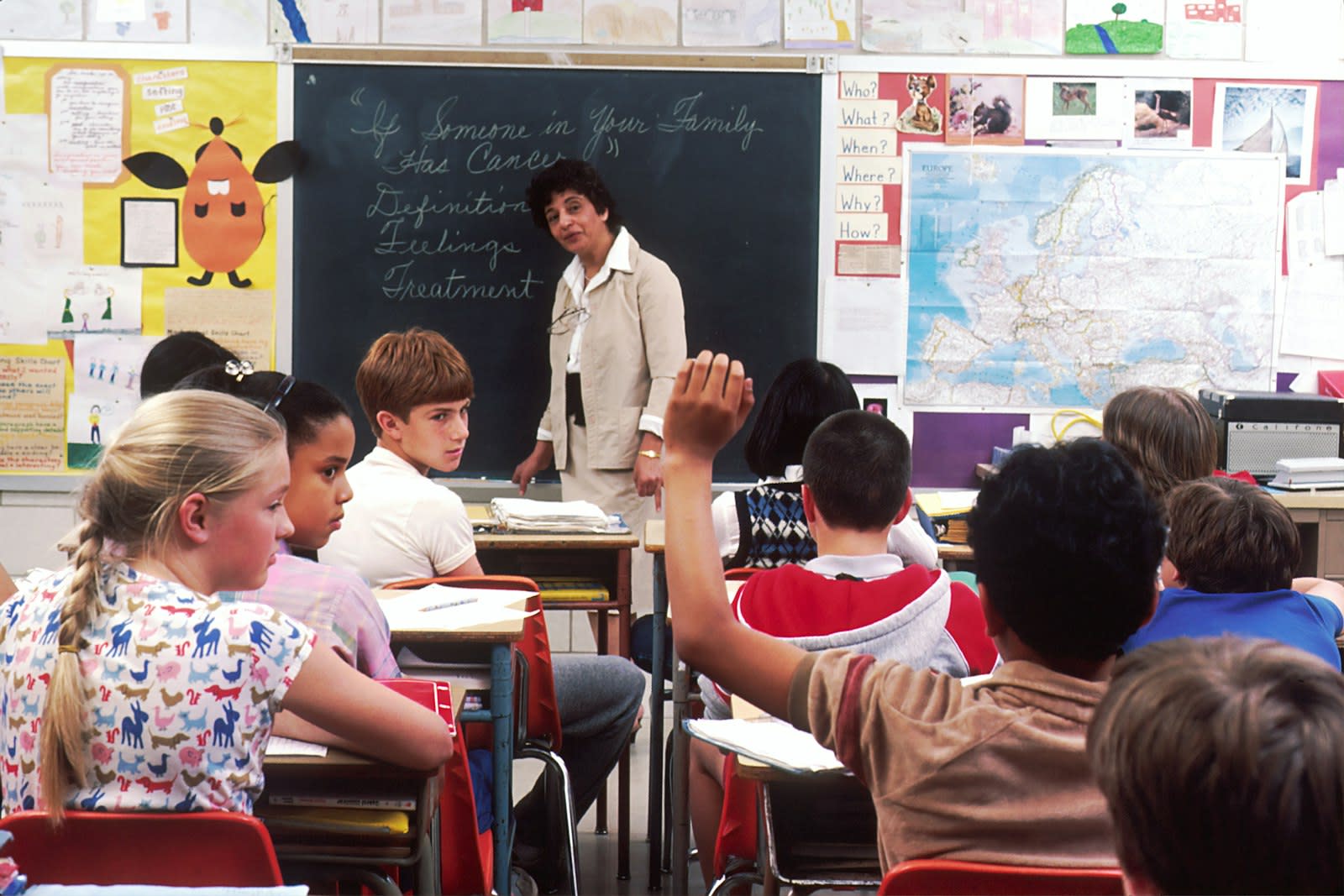
Take Kahn-Tineta Smith. She spent two decades as a classroom aide in Philadelphia while raising three children. In June 2025 she finished her first year as a Head Start teacher at Mary McLeod Bethune Elementary in North Philadelphia, having earned her certification through a city programme called Para Pathway, a collaboration between the Philadelphia school district and the Philadelphia Federation of Teachers that pays paraprofessionals' degree costs at Cheyney University. Smith's story was reported by Chalkbeat earlier this year. Since 2022, 118 paraprofessionals have completed Para Pathway. 87 are now teaching in Philadelphia schools, with another 64 currently enrolled.
That is one programme in one city.
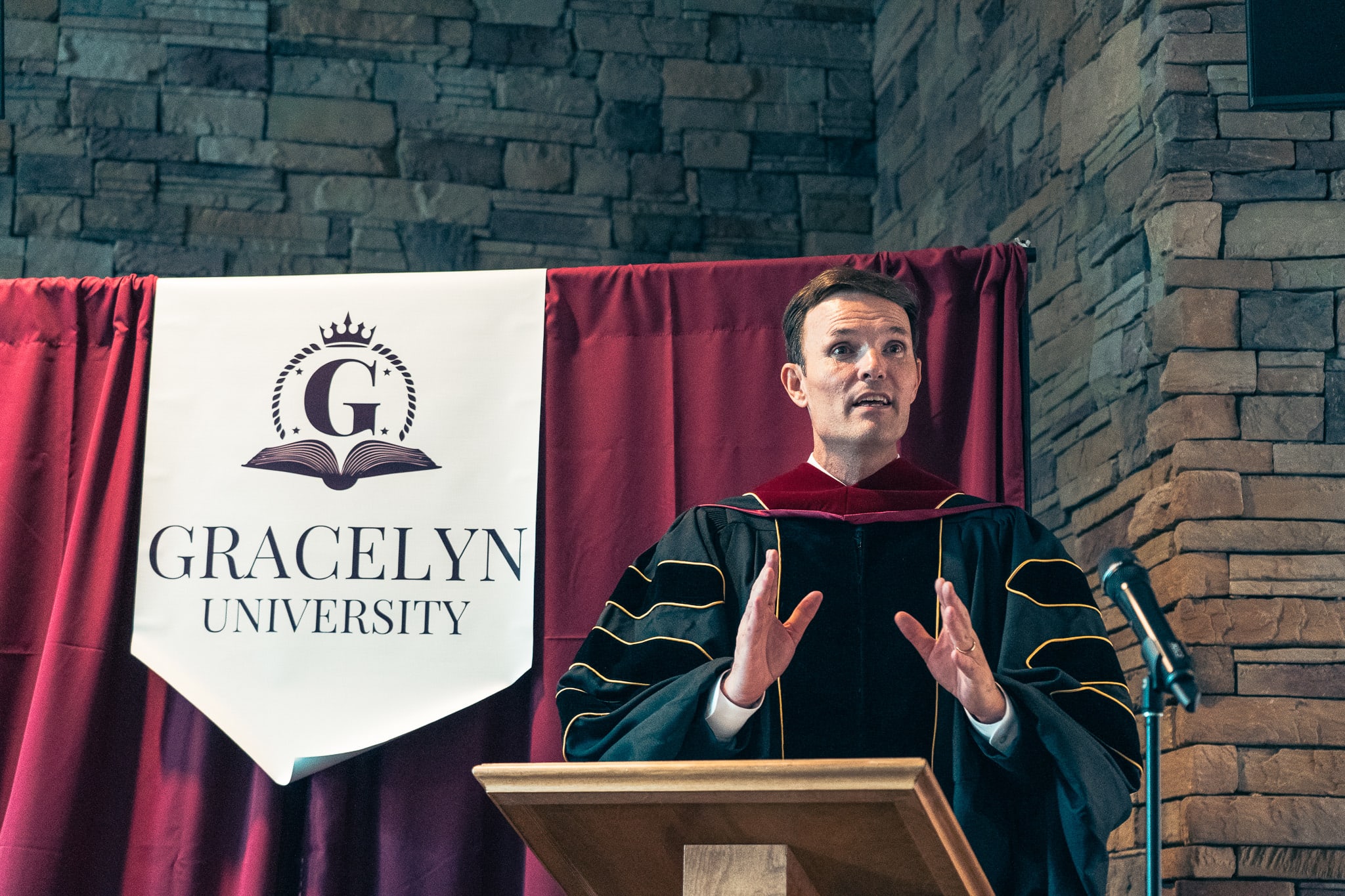
Dr. Matthew Flippen, founder and president of Gracelyn University, has been making the broader version of the argument since the late 2010s. According to Dr. Flippen,
"Many of the future teachers our communities need are already serving children today. The challenge is not always capability. Often, it is access."
Gracelyn is built specifically to serve that population: paraprofessionals, aides, and support staff who want to become certified teachers but cannot leave their jobs to do it. Accredited by the Distance Education Accrediting Commission (DEAC, federally recognised by the US Department of Education) and founded in 2021, Gracelyn lists tuition at approximately $111 per month, retention at 96 percent, and teacher-certification exam pass rates close to 100. The figures are self-reported, but in the ed-school landscape they sit at the upper end of plausible benchmarks.
"Quality comes from outcomes, accountability, and mission clarity, not from cost or institutional size."
Flippen has said the framework came to him while he was running a construction materials company in Haiti before founding Gracelyn. He watched single mothers there who could not find a path forward because every available path assumed a kind of free time they did not have. The diagnosis came out of that period, not out of an American policy conversation.
What "Grow Your Own" actually requires
The technical name for the approach is Grow Your Own: pathway programmes that lift existing school staff into certified teaching. The framework has been growing across US districts for the better part of a decade. Para Pathway in Philadelphia. Talent Together in Michigan, a state-funded model that covers tuition at Lake Superior State University while paying 80 percent of a starting teacher's salary during a year-long apprenticeship; a parallel pipeline run with Eastern Michigan University has moved 43 paraprofessionals into certified teaching jobs in Washtenaw County alone. Pipeline programmes in North Dakota, Arkansas, and Georgia. Gracelyn sits inside that wider movement. It is the most explicit articulation of the access-design argument, not the only one.
What these operators argue, and what most traditional ed schools have struggled to absorb, is that Grow Your Own pathways only work if the institution above them removes the barriers that conventional programmes preserve as features.
Full-time enrollment. Daytime classes. Residential expectations. Term-based pacing. The legacy structure of the degree.
Flippen names the underlying assumption directly:
"Higher education was largely designed around the assumption that school is the student's primary responsibility. For many working adults globally, that is simply not reality."
Removing barriers is not the same as lowering standards. Para Pathway's certification record and Gracelyn's reported pass rates suggest the two can coexist.
None of this is a complete fix. DEAC accreditation is real but not the same as regional accreditation, and some districts and graduate schools still treat the two differently. Online-only programmes carry retention questions that traditional residency models do not, and self-reported metrics from young institutions warrant the scrutiny any new model invites. Subject-specific shortages, in particular special education, STEM, and English-language instruction, will not be closed by paraprofessional pathways alone; nor will the rural-placement problem, where the willingness to teach and the willingness to stay are different commitments. The Grow Your Own framework expands the supply pool meaningfully. It does not redraw the whole map.
Why this is what the global story has been missing
The diagnosis travels.
UNESCO's 44 million figure is a global supply problem on its face. Underneath it sit several drivers: pay that has not kept pace with comparable professions, burnout amplified by post-pandemic conditions, a long erosion of public regard for teaching as a career, demographic decline in some countries and rapid expansion in others. Access-design failure is not the only upstream cause. It is one of the most overlooked ones, and one of the more tractable.
In every country with a teacher shortage there is almost certainly a population similar to the US's 1.2 million non-certified school staff: people already in classrooms, already serving children, already understanding the local context, but locked out of the credential pathway by an institution designed for someone else. Sub-Saharan Africa's 15 million teacher gap, on the scale UNESCO calls the largest in the world, is presumably full of such people. Asia's gap is full of them. Latin America's gap is full of them.
A piece we published earlier on rural electrification made a structurally similar argument: the visible problem (no power) was downstream of an invisible upstream one (no off-take economics). The same shape applies here. The visible problem is a shortage of teachers. One of the invisible upstream problems is a higher education sector designed for a student who was never going to fill the gap in the first place.
The work of fixing the shortage is not primarily about finding new people. The people are already there. As our launch piece on durable institution builders put it at lower abstraction, the most consequential work in development tends to be patient redesign of the systems that decide who counts.
The teachers the country needs already have classroom keys in their pockets. Higher education's job is to build a door they can walk through.
Key facts
- UNESCO estimates the world will need approximately 44 million additional teachers by 2030.
- In the United States, roughly 1.2 million paraprofessionals work inside school buildings every day.
- Since 2022, 118 paraprofessionals have completed the Para Pathway programme in Philadelphia.
- Dr. Matthew Flippen founded Gracelyn University in 2021 to certify paraprofessionals already working in US schools.
- Gracelyn University lists tuition at approximately $111 per month and has a reported retention rate of 96 percent.